
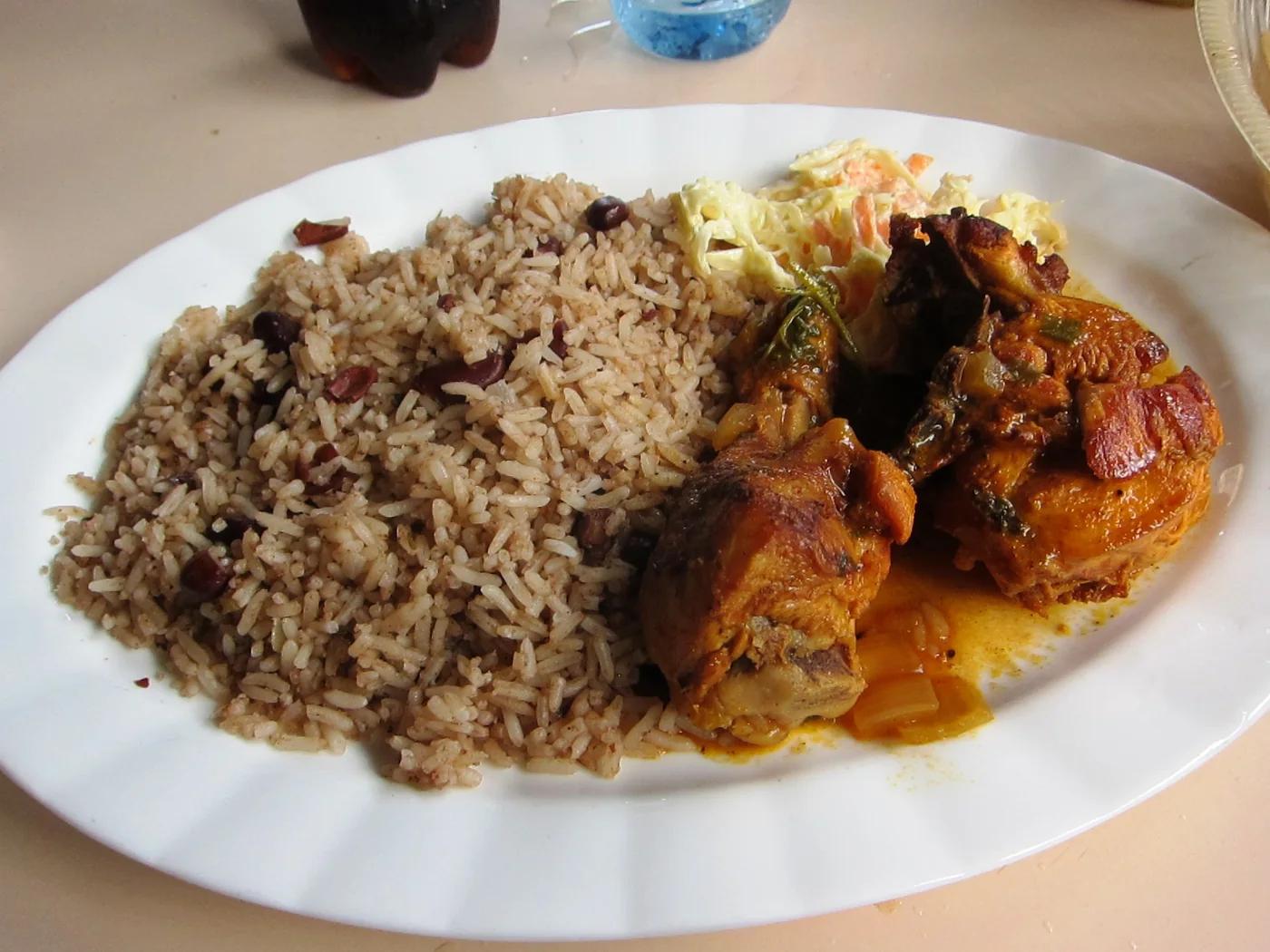
Walk past any bus terminal or park bench in Northern Belize at 7:00 AM and dinner smells already hang in the air. In Orange Walk Town, taco vendors roll warm corn tortillas faster than travelers can count out small coins. Half an hour north in Corozal Town, corner kitchens simmer red kidney beans in coconut milk while shoppers haul fresh recado bricks home from the market.
Belizean cooking never fits neatly into one box. It pulls Kriol stewing methods together with Yucatec Maya masa, Mestizo chili pastes, Garifuna coastal coconut broths, and Chinese-Belizean takeout counters. Even expats researching living long-stay in Northern Belize quickly realize that food budgets depend more on local market staples than imported groceries.
Belizean Food Quick Briefing
- Unofficial national lunch: Coconut Rice and Beans paired with caramelized red-recado Stew Chicken, potato salad, and fried ripe plantains.
- Orange Walk street benchmark: Three freshly rolled morning chicken tacos cost BZ$1.00-BZ$1.50 (
$0.50-$0.75 USD/~€0.46-€0.69). - Spice backbone: Red recado (annatto paste) seasons everyday stews, while Marie Sharp’s Stann Creek habanero sauces sit on almost every table nationwide.
- Seasonal seafood law: Spiny lobster is illegal to buy, possess, or sell during the March 1 - June 30 closed season.
What Do People Eat Across Belize?
Daily meals shift noticeably by hour and district. Breakfast centers on dough and beans. Lunch serves as the main hot plate of the day, eaten between 11:30 AM and 1:30 PM before the afternoon heat peaks. Dinner at home stays lighter, built around leftover stew, flour tortillas, or Mestizo panades and salbutes bought from an evening street cart.
If you browse the Northern Belize travel portal, you will notice how geography shapes menus. Corozal and Orange Walk lean heavily toward Yucatec and Mestizo corn dishes because families settled here from Yucatán during the 19th century. Head south toward Dangriga, Hopkins, and Placencia in Southern Belize, and coconut seafood broths from Garifuna kitchens take center stage.
For travelers tracking meal costs alongside SIM cards and buses in our Belize travel essentials guide, street stalls keep daily budgets low. A market plate of rice, beans, and stewed chicken typically runs BZ$8.00 to BZ$12.00 ($4.00-$6.00 USD / ~€3.68-€5.52), while tourist restaurants on the cayes charge triple for the same dish.
Belizean Chicken Stew
Belizean stew chicken gets its dark mahogany gloss from two kitchen steps: red recado and sugar browning. Skip either one and the gravy turns pale. Cooks do not use jarred gravy packets here. Hardly anyone substitutes plain paprika once they taste real annatto paste.
Ingredients (Serves 4 to 6)
- 3 lbs bone-in, skin-on chicken thighs and drumsticks
- 2 tbsp red recado paste (crumbled)
- 2 tbsp white vinegar or fresh lime juice
- 1 tsp garlic powder (or 3 minced cloves) and 1 tsp black pepper
- 1.5 tsp salt and 1 tbsp Worcestershire sauce (or dark soy sauce)
- 2 tbsp vegetable oil plus 2 tbsp brown sugar (for browning)
- 1 medium yellow onion, sliced, and 1 green sweet bell pepper, diced
- 2 ripe plum tomatoes, chopped
- 2 sprigs fresh thyme and 1 cup water or broth
Cooking Steps
- Marinate the meat: Mash red recado with vinegar (or lime juice), garlic, black pepper, salt, and Worcestershire sauce into a crimson rub. Coat every piece of chicken thoroughly and rest 30 minutes (or overnight in the fridge).
- Caramelize the brown sugar: Warm oil in a Dutch oven over medium heat. Sprinkle brown sugar across the oil without stirring early. Once it melts, foams dark amber, and smokes faintly (do not let it burn black), add the chicken carefully.
- Sear and braise: Turn the chicken briskly so caramel coats the skin, searing 4 minutes per side. Add onion, sweet bell pepper, tomatoes, thyme, and 1 cup water. Cover and simmer on low for 30 to 35 minutes until meat pulls cleanly from the bone and the gravy thickens.
Belizean Rice and Beans (One-Pot Coconut Recipe)
Ask any Belizean cook and they will correct you fast if you swap the word order. Rice and beans cooks both ingredients together in coconut milk so the starch and fat marry into one rich dish. Beans and rice keeps them seperate on the plate, with plain white rice topped by stewed beans. Sunday tables almost always demand the one-pot coconut version.
Ingredients (Serves 6)
- 1 lb (2 cups) dried red kidney beans, rinsed
- 6 cups water, 4 cloves smashed garlic, and 1 small onion, quartered
- 1 can (13.5 oz) full-fat unsweetened coconut milk
- 3 cups long-grain white rice, rinsed twice
- 2 sprigs fresh thyme, 1.5 tsp salt, and 1 tsp black pepper
- 1 whole green habanero pepper (kept unbroken for aroma)
Cooking Steps
- Simmer the beans: Soak kidney beans overnight (or quick-boil and rest 1 hour). Drain, add 6 cups fresh water, garlic, and onion, and simmer 60 to 90 minutes until tender without bursting.
- Build the coconut broth: Leave beans and cooking liquid together so they total roughly 4 to 4.5 cups with the coconut milk added. Stir in coconut milk, thyme, salt, black pepper, and the whole unbroken habanero, then boil gently for 5 minutes.
- Steam the rice: Stir in rinsed white rice once, check that liquid sits half an inch above the grains, and drop heat to low. Cover tightly with foil under the lid and cook untouched for 20 to 25 minutes until dry and fluffy. Discard thyme stems and whole pepper before serving.
(Kitchen note: Never burst the habanero while stirring unless your whole table wants serious heat. Left whole, it perfumes the coconut rice with crisp fruitiness.)
Belizean Fry Jacks & Johnny Cakes for Breakfast
Few morning smells beat dough hitting hot oil in a Belizean kitchen. Fry jacks puff into crisp, hollow triangles in under two minutes, ready to tear open and stuff with refried black beans, scrambled eggs, or shredded Edam cheese.
Quick Fry Jacks Recipe (Makes 10 to 12)
- 3 cups all-purpose flour, 1 tbsp baking powder, 1 tsp salt
- 1 tbsp vegetable shortening or unsalted butter
- 1 cup warm water, plus vegetable oil for frying
Rub shortening into flour, baking powder, and salt until crumbly. Pour in warm water slowly and knead 3 minutes into soft dough, then rest covered for 20 minutes. Roll a quarter-inch thick, cut into 3-inch squares or triangles, slice a small vent slit in each center, and fry at 365°F (185°C) for 45 seconds per side until golden. Drain on paper towels and serve hot.
Johnny cakes (“journey cakes”) use almost the same ingredients, swapping water for coconut milk and baking in the oven for 18 to 22 minutes instead of frying. Those dense, buttery biscuits travel cleanly in a daypack before an early Lamanai and Orange Walk river safari.
Regional Classics: Orange Walk Tacos, Hudut, Mestizo Snacks & Gibnut
Step past the standard lunch plate and Belize’s regional food map comes into sharp focus.
Orange Walk Morning Tacos
Locals call Orange Walk Town “Sugar City,” though travelers know it best as Belize’s taco capital. Between 6:00 AM and 10:00 AM, open-air stalls around Queen Victoria Avenue and Central Park fold stewed shredded chicken into small steamed corn tortillas, finished with cabbage, cilantro, and onion-habanero vinegar sauce. Three tacos cost BZ$1.00 to BZ$1.50 ($0.50-$0.75 USD / ~€0.46-€0.69), making it cheap to test two competing carts before boarding a Tower Hill boat.
Mestizo Panades, Salbutes & Chimole
Across Corozal and Orange Walk, evening street carts turn corn masa into three beloved Mestizo staples:
- Panades: Half-moon fried corn turnovers stuffed with flaked smoked fish or seasoned beans and topped with pickled cabbage (cortido).
- Salbutes: Puffed fried corn tortillas layered with shredded chicken, cabbage, tomato, and pickled red onion.
- Chimole (“Black Dinner”): A rich Mestizo soup darkened with black recado, simmered with chicken, pork meatballs (bolitas), and boiled eggs.
Garifuna Hudut & Coastal Kitchens
South along the coast in Dangriga, Hopkins, and Placencia, put hudut first on your lunch list. Garifuna cooks simmer fresh snapper or grunt in coconut milk broth scented with sweet basil, garlic, and habanero. Beside the bowl sits fu-fu: green and ripe plantains boiled together and pounded in a wooden mortar until smooth. Tear off a piece with your fingers. Use it to scoop up the spiced broth.
Huevos Rancheros & Border Breakfasts
Close to the Mexican border in Corozal and Orange Walk, morning menus borrow freely from Quintana Roo kitchens. Huevos rancheros pairs two fried eggs over lightly crisped corn tortillas with warm tomato-serrano salsa and refried black beans, fueling early stops around Corozal Town.
Gibnut (“Royal Rat”) & Marie Sharp’s
Rural restaurants in Orange Walk and Cayo sometimes serve gibnut, a native forest paca prized as tender game meat tasting similar to roast pork or rabbit. British tabloids dubbed it the “Royal Rat” after Belizean hosts famously served roasted gibnut to Queen Elizabeth II during her 1985 state visit.
Every dining table nationwide shares one staple bottle: Marie Sharp’s hot sauce. Made in Stann Creek District near Dangriga from fresh red and green habaneros blended with carrot, onion, garlic, and lime juice, it brings bright vegetable flavor rather than blunt vinegar burn. Test a drop first.
What Is Red Recado (And How to Shop for Belizean Spices)
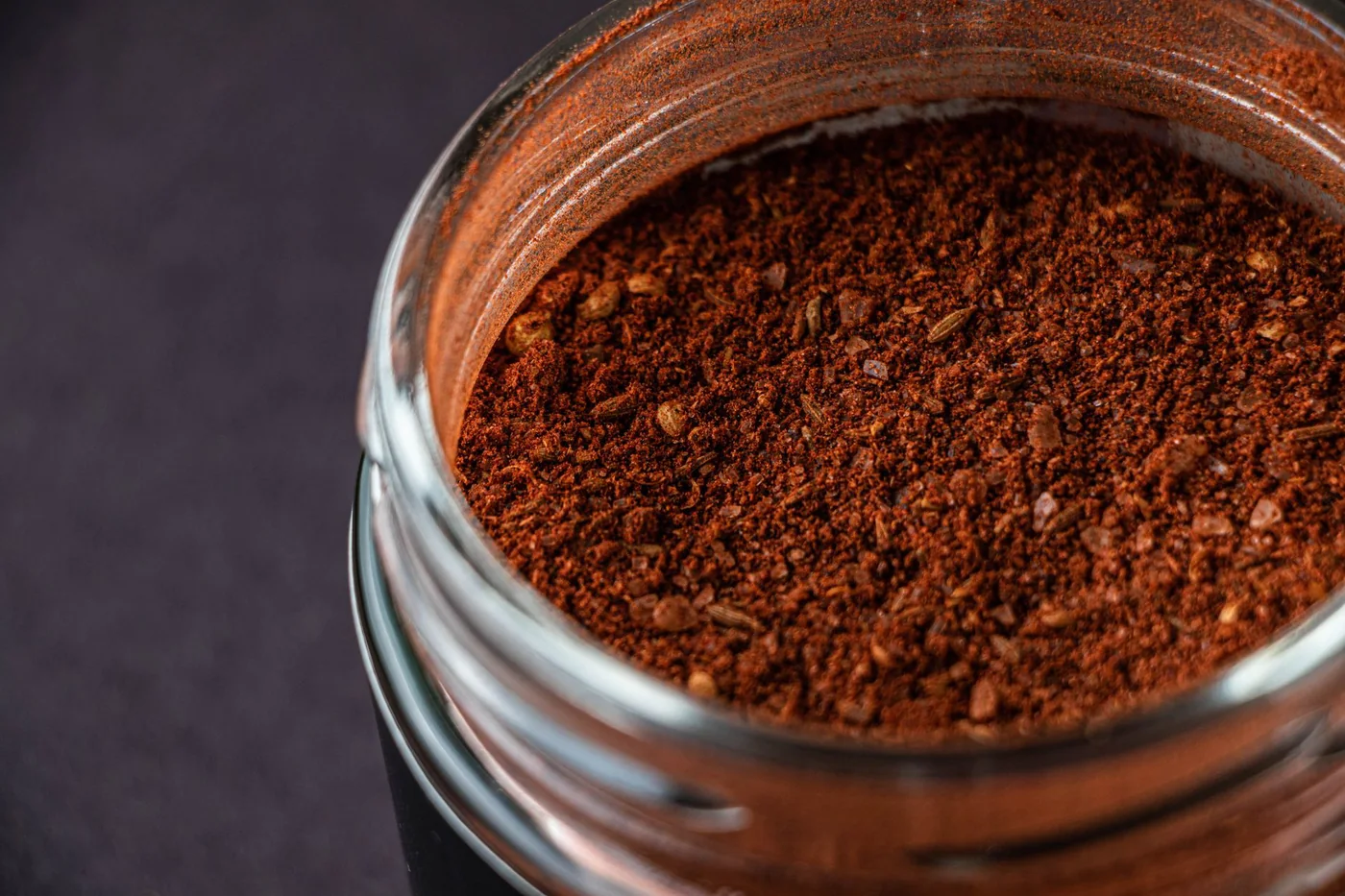
Red recado (Recado Rojo) is a dense, brick-red seasoning paste ground from annatto (achiote) seeds, cumin, oregano, cloves, black pepper, and garlic. It delivers earthy warmth and rust-orange color to stew chicken, tamales, and panades. Black recado (Recado Negro) replaces plain annatto with charred dried chilies and roasted spices for chimole.
Small wrapped blocks cost BZ$2.00 to BZ$5.00 ($1.00-$2.50 USD / ~€0.92-€2.30) at municipal produce markets in Orange Walk Town and Corozal Town, or inside neighborhood corner groceries. Pick pliable blocks sealed in clear plastic rather than sun-dried bricks. Taking spices home? Stick to factory-sealed recado packets and bottled Marie Sharp’s sauces, because fresh chilies, raw meats, and loose plant matter trigger strict checks by the Belize Agricultural Health Authority (BAHA) and foreign customs officers.
Food Safety, Street Stalls & Seafood Laws
- Pick high-turnover street stalls: In Orange Walk, eat at busy morning carts where tortillas come straight from steaming cloths rather than quiet midday tables holding lukewarm meat.
- Watch water and rural ice: Municipal tap water is treated, yet pressure drops and rural cisterns upset visitor stomachs. Drink sealed bottled water (Crystal or Happy Cow) and avoid loose shaved ice at remote roadside carts.
- Obey Spiny Lobster & Conch closures: Belize enforces a strict nationwide Spiny Lobster Closed Season from March 1 through June 30. Buying, possessing, or ordering lobster during those four months is illegal. Queen conch also carries seasonal closures (typically July through September).
Want to pair street markets with Maya ruins or reef snorkeling? Browse guided day trips in our Belize tours and tickets directory, or return to the Northern Belize travel guide to plan your route district by district.